
Going Nowhere, Manny Montelibano
Curatorial Text by Portia Placino
Exhibition Run
08 August
03 October 2025
Opening Reception
08 August | 3 pm
Photos courtesy of JCB Gallery and JL Diquit
This reinstallation of the 2022 work reflects on the cyclical and oppressive nature of elections in the Philippines. In light of the country’s deepening crisis with electronic gambling, the project now feels prescient—anticipating the aftermath of the 2022 national elections.
Curatorial Statement by Portia Placino
Manny Montelibano's Going Nowhere shows the frustrating nature of chance in Philippine elections. The system is cyclical, defeatist, and the house always wins. The work's slot machine structure reflects how Filipinos are routinely played, manipulated, and ultimately defeated. Three years after electing the sitting president, gambling became an ever-present social problem—as if Montelibano had already foreseen this trajectory in the earlier iteration of the exhibition at Orange Project in 2022.
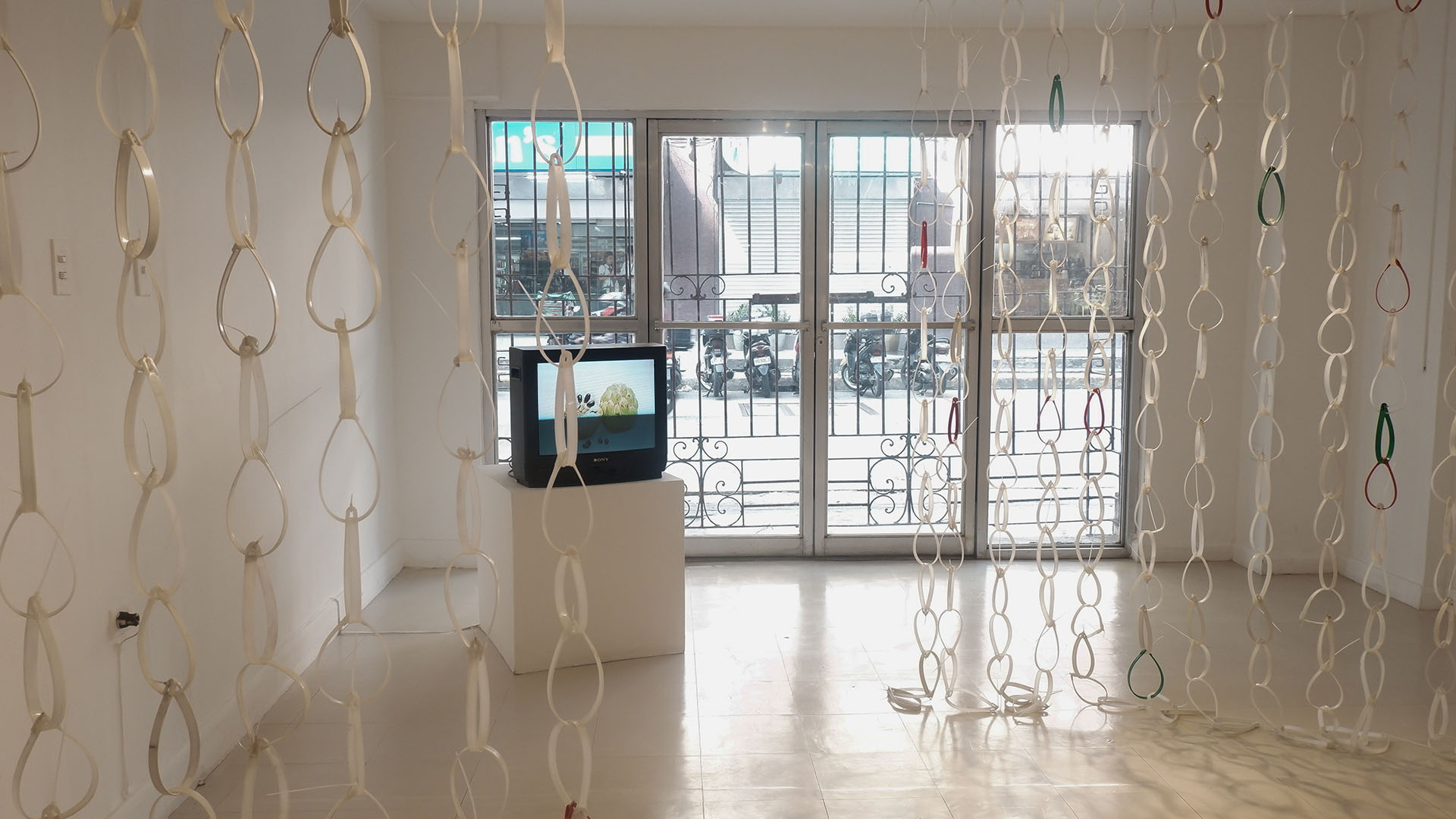
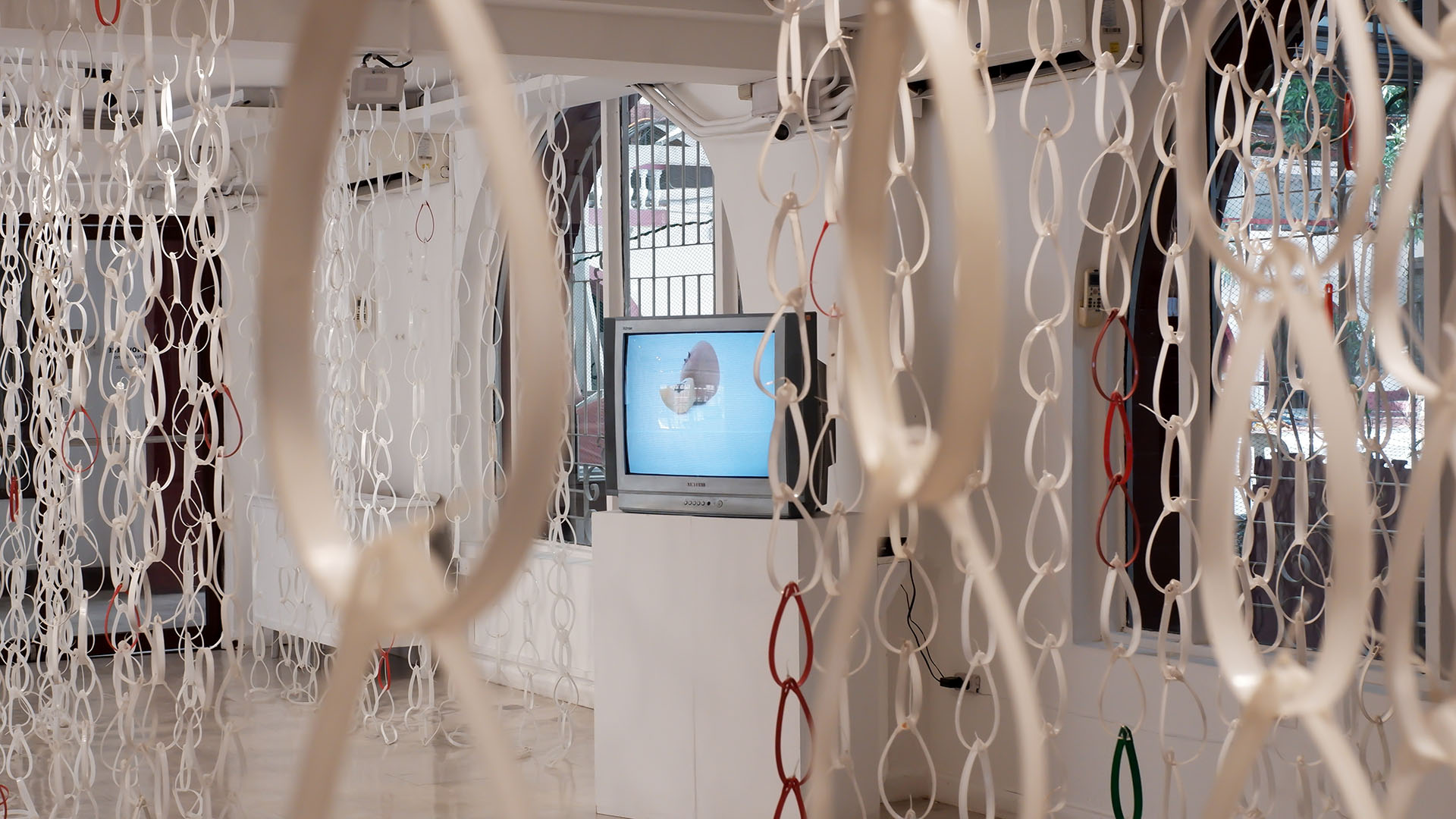
The installation captures the feeling many Filipinos carry silently—elections in the Philippines are not a vehicle for change but a machine for repetition—a ritual of noise, spectacle, and disappointment. Bolted to depend on luck, the five-channel video installation, composed of found photos of electoral candidates across all levels of government—president, vice president, senate, congress, mayor—is presented alongside photos of fruits, not linearly, but as a looped sequence. Images flash like advertisements. The ringing of slot machines is ever-present, constant, and inescapable.
Blocking the videos and disrupting the space are paint bucket handles tied as if they are chains and droplets. Mishandled resonates with the disruptions to dreams and aspirations. Though there is always hope for the future, the current system continually destroys hope, designed to keep failing the populace.
Voting in the Philippines is like pulling a lever on a slot machine. You spin. You wait. You hope. The reels turn, the lights flash, the bell chimes. But in the end, the machine always wins. The house always wins. Everything else blocks the struggle for something better. And the people, again and again, are left with nothing. At most, Filipinos win loose change—but the losses, collectively and historically, are always greater.
This is the condition of a country trapped in bright lights and hopelessness. It is the condition of a nation locked into cycles it cannot escape. The gallery becomes a loop—each screen competing for attention, yet none offering clarity. The flow is always disrupted, the future always unclear. It is disorienting, then numbing. This is the state of politics in the Philippines today: sensory overload, strategic incoherence, emotional exhaustion.
The frustration in Going Nowhere rings out with the constant, inescapable chime of machines. It is anger that comes from watching the same play every three or six years, with the same actors and the same endings. Clarity is lacking, imprisoning the Filipinos in endless loops. At times, it feels the fight has been flattened into symbols. Only repetition. The kind that eats away at our hope for the country.
The gallery transforms into an arcade: five slot-machine screens, loud and bright, hungry for attention. Like a casino, even when someone wins, everyone loses. There are no jackpots. Just recycled slogans, repeated names, and campaign lights that blind more than they illuminate. At each turn, something blocks the vision of something better.
The images in Going Nowhere are nothing new—they are frustratingly familiar. And that familiarity is violent. We know these faces. We remember their promises. And yet, we keep spinning. We keep betting. We keep hoping. Because the system is built to extract participation, even without reward. Yet we stay imprisoned.
Participating in elections can feel disempowering. Not because voting is meaningless, but because it is manipulated to legitimize a machine designed to protect itself. By making the process feel random—by flooding the senses, by presenting options that appear new but functionally the same—the system repeats itself. Democracy becomes performative. Change becomes impossible. The present feels like a trap.
Still, there is resistance. There is power in holding up the loop and refusing to look away. The loop becomes unbearable because it is true. The slot machine never pays out, but it never stops spinning either. The real question, then, is not who wins—but why we keep playing.