
Ang Kabuhi Sang Gaga, Brenda V. Fajardo
Curated by Portia Placino
Exhibition Run
29 October 2024
10 January 2025
Curatorial Statement by Portia Placino
We started planning for a Brenda V. Fajardo exhibition a year ago, and one of the first projects I wanted to pursue for the JCB Gallery. Along with Tin-aw Art Management, we had to wait for the right time, especially with several of her works on loan for different exhibitions around the globe. Our hearts were collectively broken when she passed away weeks before the exhibition was about to open. There was a question of whether we would open as planned, or delay the exhibition for a later date. Considering several factors, we decided to open the exhibition in the week we planned and one day after the traditional forty days of mourning.
Celebrating her life and works seemed fitting within the Philippine Women’s University. She spent her basic education at the Jose Abad Santos Memorial School and Philippine Women’s University High School. The Tin-aw team found memorabilia from her early days and a few progress report cards from the time spent here, inviting us to reflect on her moments as she showed an early interest in the arts. She also took art lessons from Araceli Limcaco Dans and printmaking engagements with Manuel Antonio Rodriguez Sr. Through the decades, Brenda V. Fajardo engaged in different artistic collaborations with the gallery, especially during the tenure of Karen Ocampo Flores and Noel Soler Cuizon in the gallery.
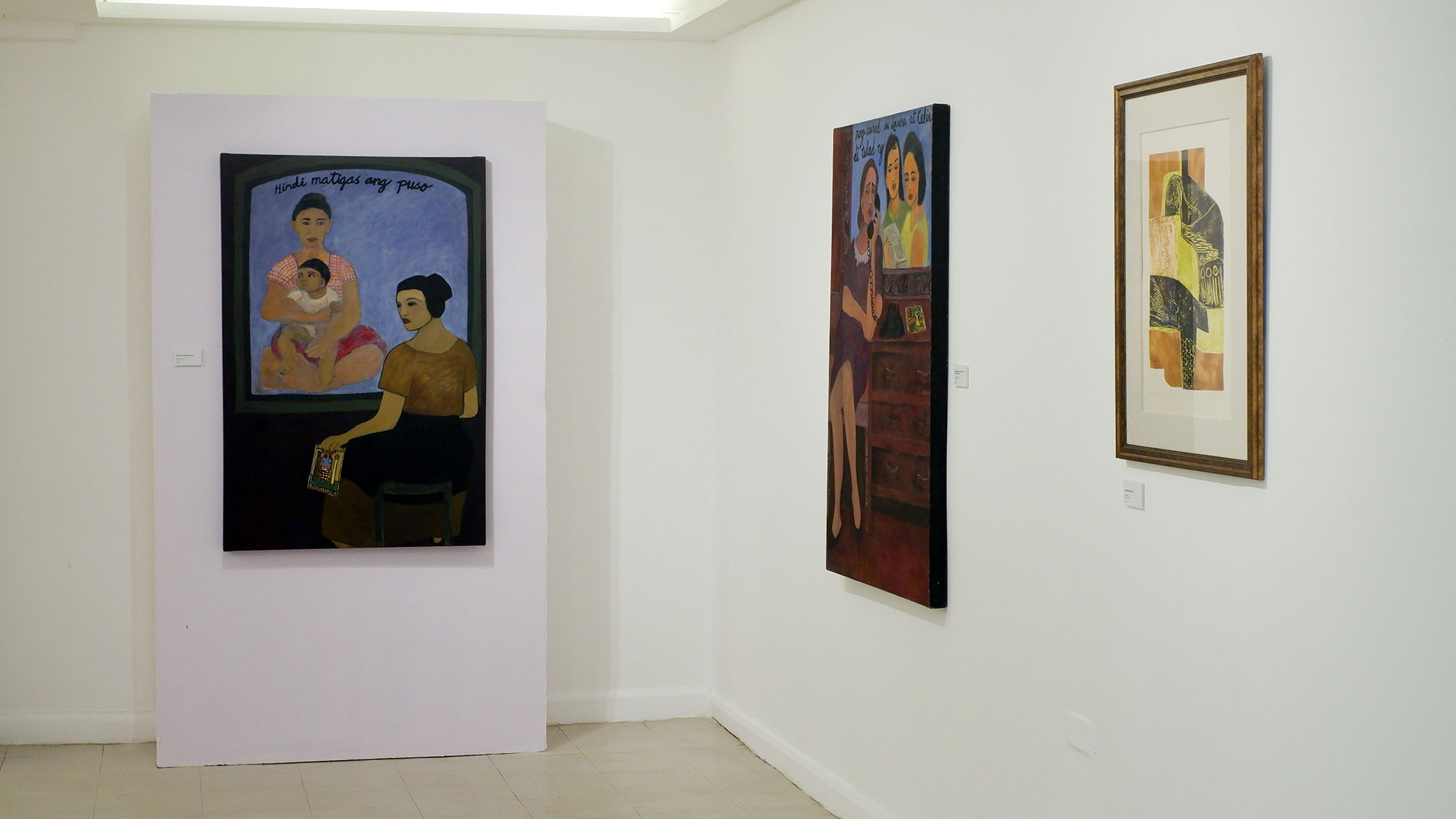
We cannot claim an attempt at a retrospective because of the limitations of the space. However, the modest space of the JCB Gallery invites an intimate contemplation of Brenda V. Fajardo’s practice. She moves from printmaking to painting to watercolor and back again through the decades. Her reimaginings of Philippine history, epics and legends, and women and their roles and the positions they occupy in society are ever-present in her works. Yet just as important are her perspectives and viewpoints of the world, her emotions, and her experimentations in the forms she was engaging with at the time.
It has been fifty years since her first solo painting exhibition at Kalinangan ng Lahi Gallery in Quezon City in 1974. The timing, though unintentional, reflects the ebbs and flows of time in Philippine history and Brenda V. Fajardo’s practice. Her prints from the 1970s have strong linear qualities and intricate movements. At the time, there was limited access to presses and planning was important in creating editions. Yet, it was also a more affordable medium for experimentation. The decade was turbulent, as the country was trapped in a dictatorship with critical creative practice threatened. It was also a decade when women in the arts became a focal point of feminist discourse, particularly after Linda Nochlin’s Why Have There Been No Great Women Artists? essay was published. Locally, Filipino women artists, including Brenda V. Fajardo, engaged in printmaking, creating a burgeoning feminist artistic moment from the 1970s to the 1980s. She, alongside Imelda Cajipe Endaya, Ida Bugayong, Julie Lluch, and Anna Fer eventually founded KASIBULAN in 1987.
Baraha ng Buhay Pilipino (Playing Cards of Filipino Life) or her Tarot Series is her most well-known work. She engaged with a post-colonial perspective, looking into untangling Filipino identity from the trappings of the colonial narrative. Strong female imagery outside of the traditional meek representations is seen in the early prints and will continue through the decades. The paintings from the 1990s expand on the narrative, looking into everyday life and demanding strength, at the same time heart, in engaging women’s experiences and struggles. Reimagining the Babaylan (Shaman) and Gaga (Fool) among many other symbols became emblematic of Brenda V. Fajardo’s art practice.
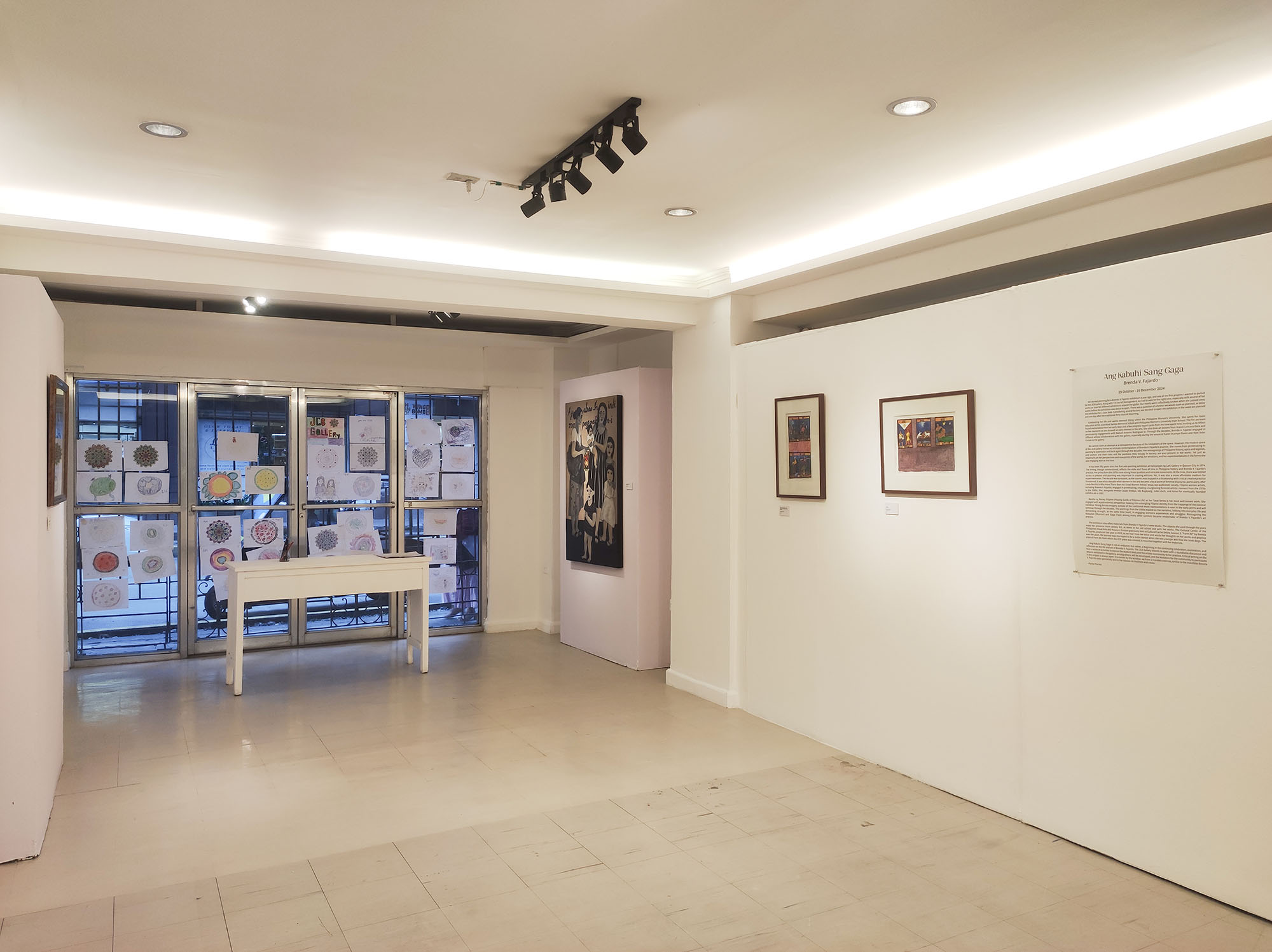
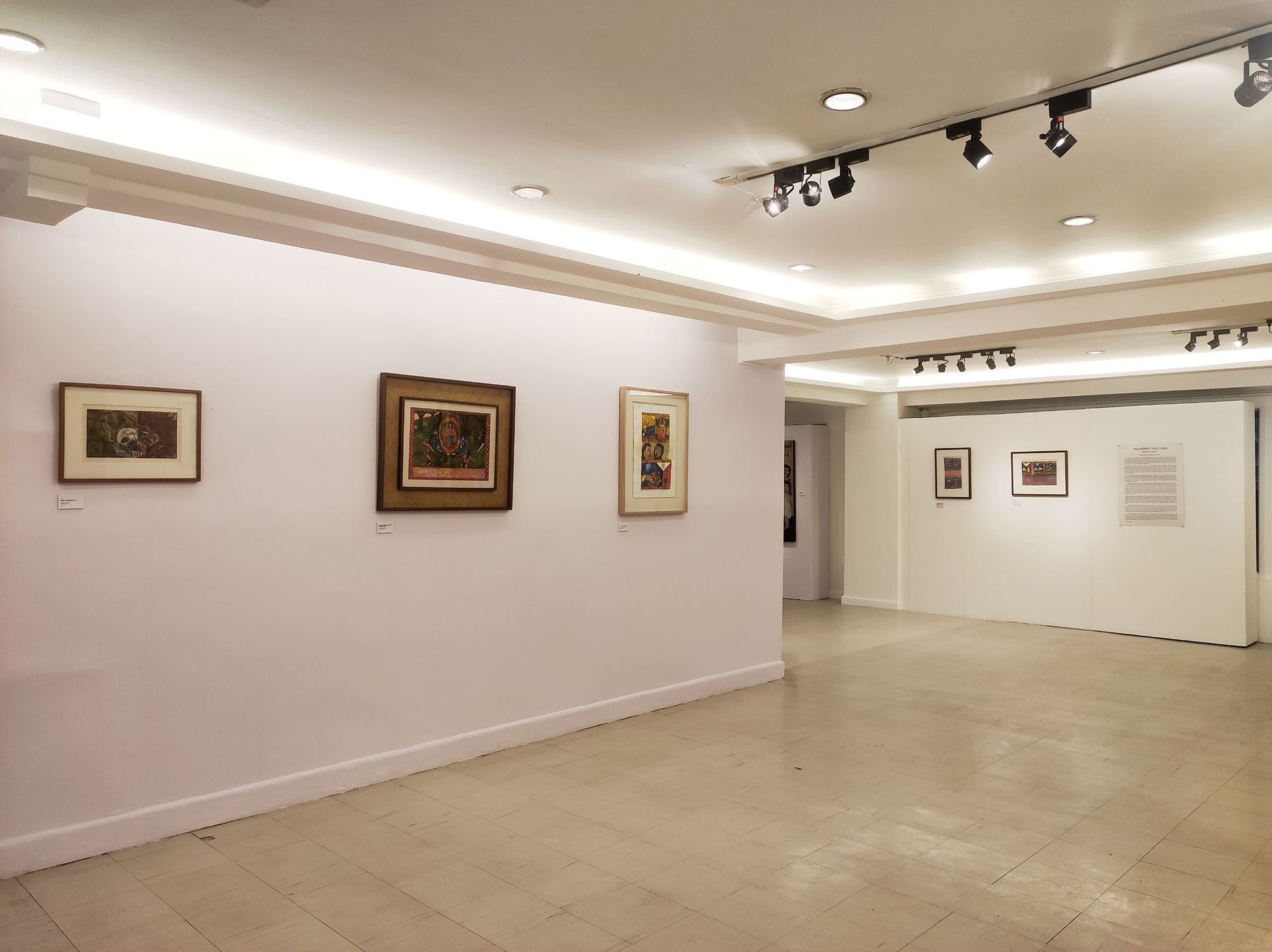
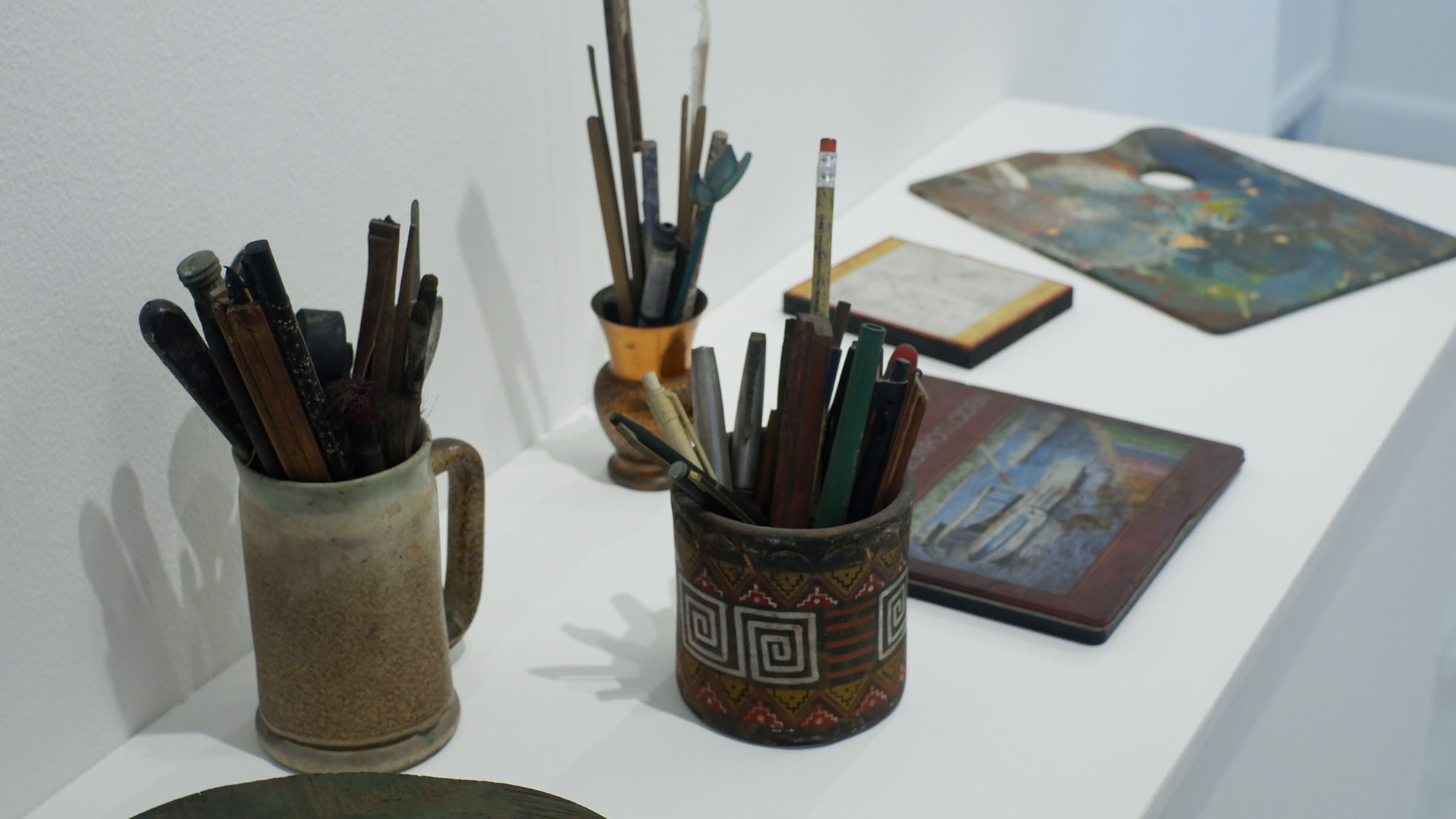
The exhibition also offers materials from Brenda V. Fajardo’s home studio. The objects she used through the years make her presence more deeply felt, at home in her old school and with her works. The Cultural Center of the Philippines Visual Arts and Museum Division graciously lent us Cultural Cache Online Season 3: “Form XV” by Brenda V. Fajardo, produced last year in 2023, as we hear from her voice and words her thoughts on her works and practice over the years. We learned how she hoped to be a ballet dancer when she was younger and how she loves dogs. The plate of Form XV, from where the CCP piece was created, is mounted together with her materials.
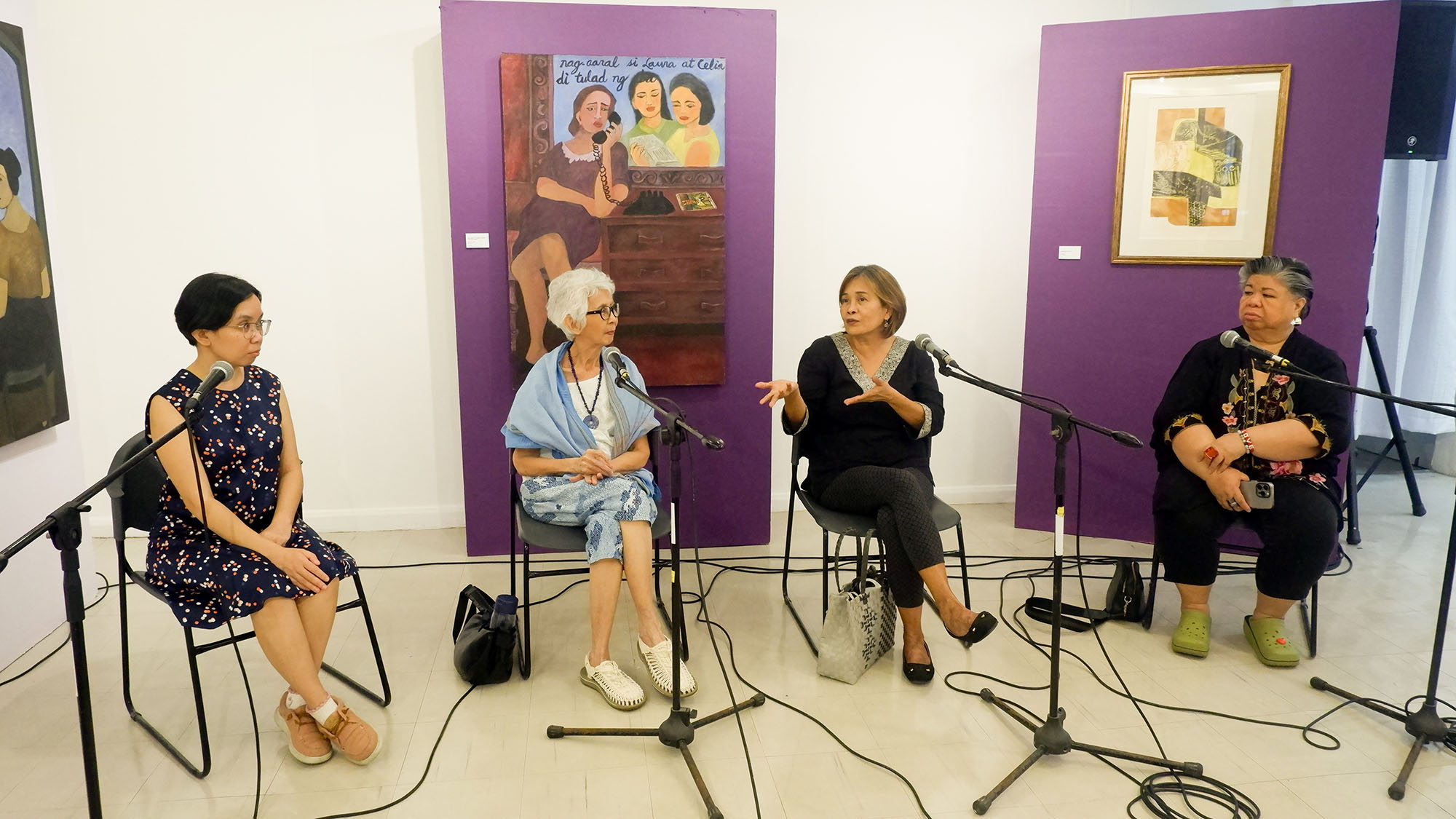
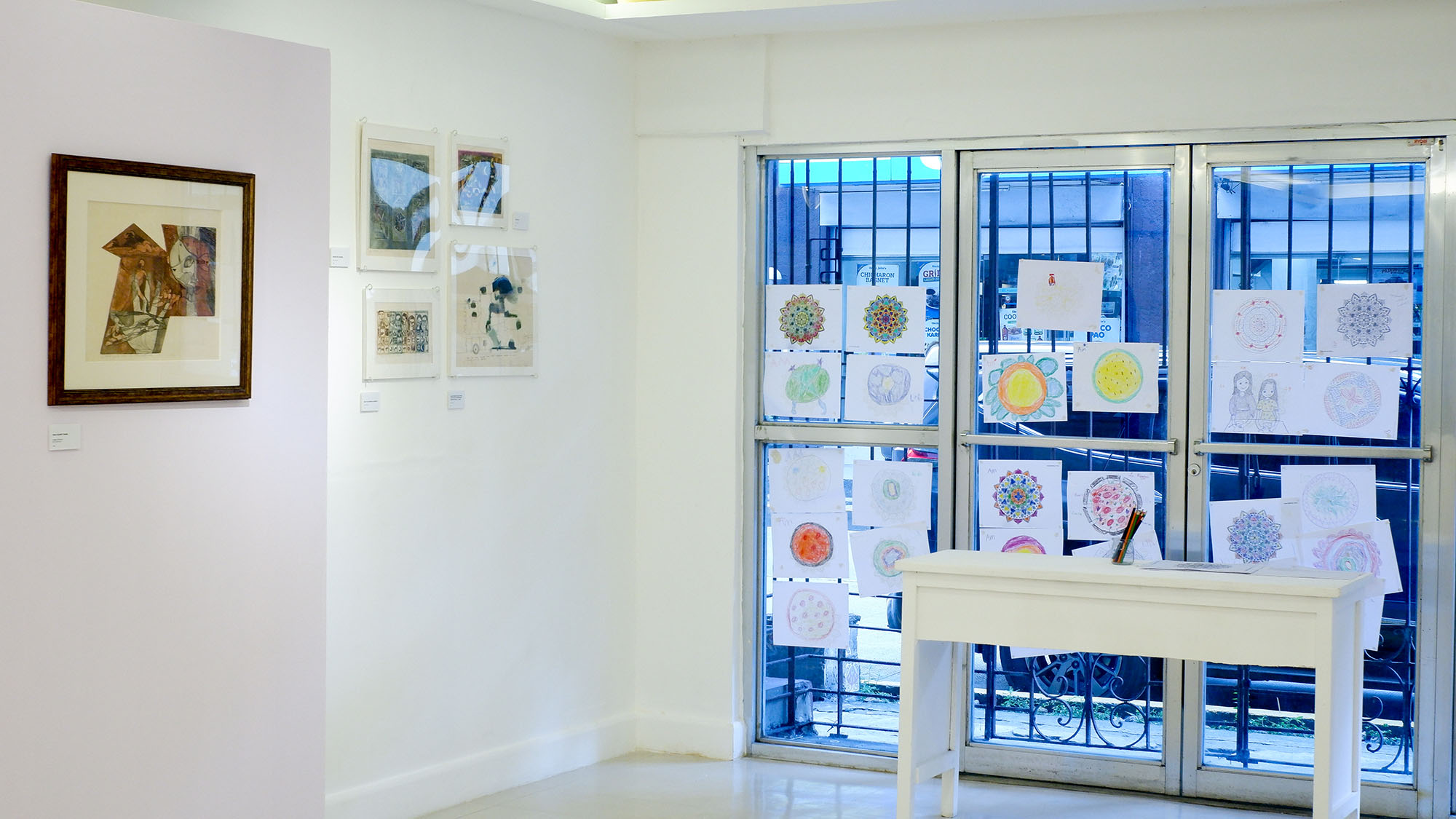
Ang Kabuhi Sang Gaga is not an endpoint, but rather, a beginning in the continuing celebration, exploration, and reflection on the life and art of Brenda V. Fajardo. The JCB Gallery intends to open with a roundtable discussion and host a series of activities to expose the student body and the artistic community to her practice. Critical writing on the objects exhibited in the gallery, among others, will be developed, and the invitation for the community to participate in the project is always open. In a corner by the window, we have a mandala exercise, similar to the mandalas Brenda V. Fajardo uses–personally and in her classes–to meditate and create.